Introduction
Introducing two adult dogs requires patience, planning, and careful observation. Adult dogs may have different personalities, experiences, and social preferences. Therefore, forcing them together can create unnecessary tension. Learning how to introduce two adult dogs on neutral territory without fighting helps both dogs feel safer.
A neutral location is especially useful because neither dog feels responsible for protecting its home. However, the location alone does not guarantee a peaceful meeting. Your timing, handling, distance, and ability to recognize body language all matter.
The goal should not be instant friendship. Instead, aim for calm coexistence and gradually build positive associations. Some dogs may become playful quickly, while others need several controlled meetings.
Why Neutral Territory Matters When Introducing Adult Dogs
Dogs can become protective around familiar spaces. A home contains valuable resources, including food, beds, toys, and favorite people. An unfamiliar location removes many of these triggers.
A quiet park, open field, or calm walking path can work well. Avoid crowded dog parks because uncontrolled interactions can increase pressure. Choose a place where both dogs can move comfortably.
When learning how to introduce two adult dogs on neutral territory without fighting, remember that distance is your friend. Dogs do not need to greet immediately. They can first notice each other from a comfortable distance.


This approach gives each dog time to process the other dog’s presence. It also allows you to observe early signs of stress before they become serious.
Prepare Before the First Meeting
Preparation begins before the dogs see each other. Both handlers should use secure, comfortable equipment. Standard walking leashes usually provide better control than retractable leashes.
Avoid tight, constant leash pressure. A rigid leash can increase frustration or make a dog feel trapped. Keep the leash controlled while allowing enough movement for normal walking.
Choose treats that both dogs enjoy. Small treats can help create positive associations during the meeting. However, avoid throwing food between dogs during close interactions.
It is also useful to give both dogs adequate exercise beforehand. The goal is not to exhaust them. A relaxed walk can reduce excess excitement before the introduction.
Make sure both dogs are healthy and comfortable. Pain, illness, or physical discomfort can affect behavior. If either dog has a history of aggression, professional guidance is strongly recommended.
Start With Parallel Walking
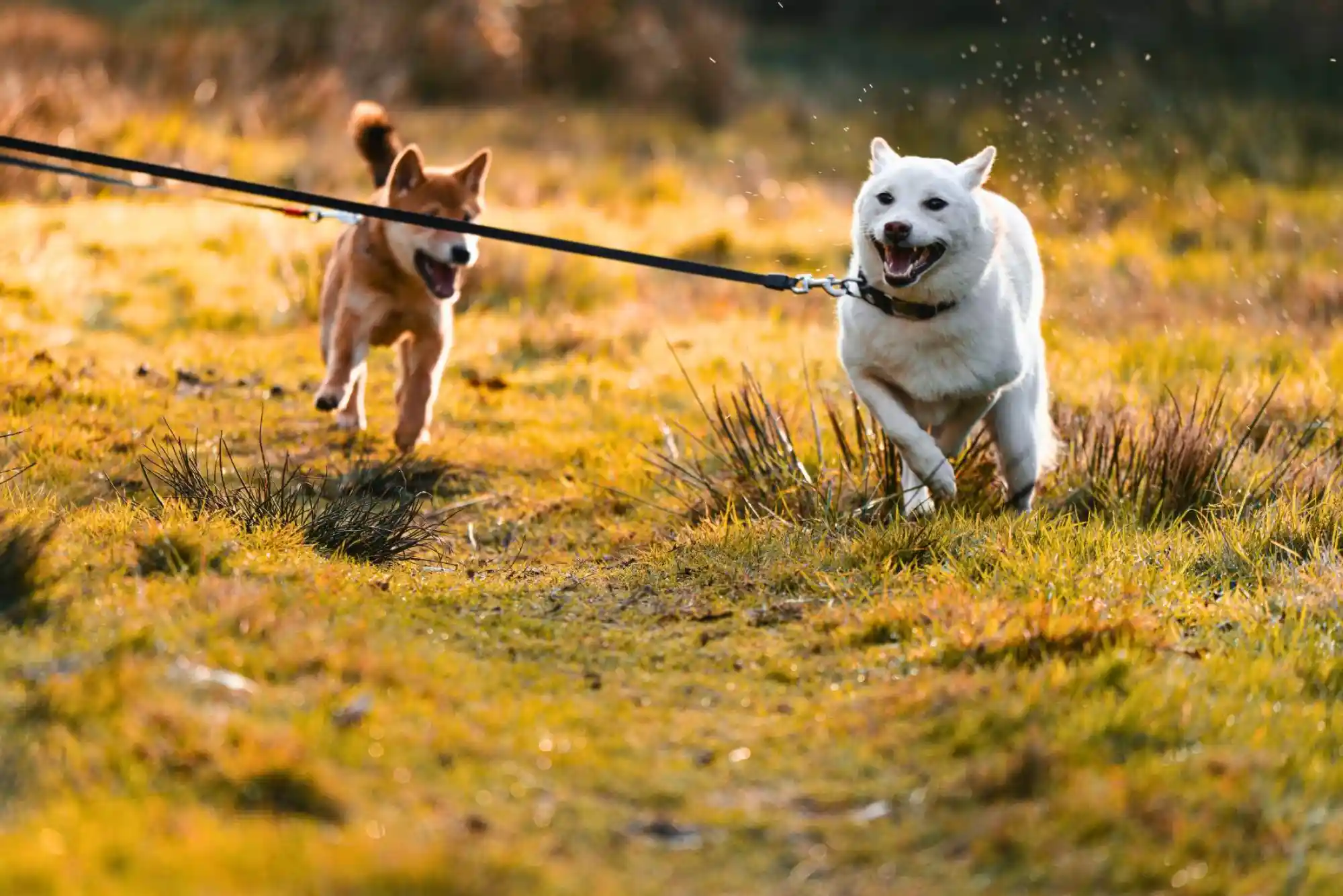
Parallel walking is one of the most useful techniques for introducing unfamiliar adult dogs. Begin with the dogs far enough apart that neither appears overwhelmed.
Walk in the same direction with one handler per dog. Do not immediately walk directly toward each other. Instead, allow both dogs to become accustomed to seeing and smelling the other from a safe distance.
Watch their body language carefully. A relaxed dog may have a loose body, natural movement, and a neutral or gently wagging tail. Stress can appear through freezing, intense staring, tucked tails, lip licking, yawning, or repeated avoidance.
If both dogs remain relaxed, gradually reduce the distance. Do this slowly rather than making one large approach.
The process may take several minutes or multiple sessions. That is completely normal.
Let the Dogs Set the Pace
One of the most important rules in how to introduce two adult dogs on neutral territory without fighting is to avoid rushing.
Some dogs naturally prefer more personal space. They may want to observe another dog before approaching. Respecting that preference can prevent unnecessary conflict.
Allow the dogs to walk near each other when their body language remains loose. If either dog becomes tense, increase the distance again.
A successful introduction is not measured by how quickly the dogs touch noses. It is measured by whether they can remain calm around each other.
Therefore, move forward only when both dogs appear comfortable.
Allow a Brief Greeting
After successful parallel walking, you can consider a brief greeting. Keep the interaction short and controlled.
Allow the dogs to approach in a curved path rather than forcing a direct face-to-face meeting. Direct approaches can feel confrontational to some dogs.
Let them sniff briefly. Then calmly encourage them to continue walking.
There is no need to keep them together for several minutes during the first greeting. Short positive interactions are often easier for dogs to handle.
If both dogs remain relaxed, another brief greeting can happen later.
Understand Dog Body Language
Reading body language is essential when learning how to introduce two adult dogs on neutral territory without fighting.
Relaxed behavior usually includes loose muscles, normal breathing, flexible movement, and natural curiosity. The dog may sniff the ground or casually look away.
Warning signs deserve immediate attention. These can include a stiff body, prolonged staring, raised hackles, closed mouth with tension, growling, lunging, snapping, or repeated attempts to escape.
A wagging tail does not always mean friendliness. Tail position and movement must be considered alongside the rest of the dog’s body.
For example, a high, stiff tail can indicate arousal or tension. A loose, sweeping tail can suggest a more relaxed emotional state.
When you see concerning signals, calmly create more distance. Do not punish the dog for communicating discomfort.
Avoid Common Introduction Mistakes
Many problems happen because people move too quickly. Owners may assume dogs should immediately play because both animals are friendly individually.
However, social behavior depends on context. A dog can be friendly with familiar dogs and still feel uncomfortable around a new adult dog.
Another common mistake is forcing face-to-face contact. Pulling dogs closer can remove their ability to create space.
Crowded locations can also make introductions harder. Too many people, dogs, noises, and distractions can increase arousal.
Avoid correcting normal warning signals through punishment. Growling is communication. Suppressing the warning may remove the signal without removing the underlying discomfort.
Instead, increase distance and identify what caused the tension.
What to Do If the Dogs Become Tense
Even careful introductions can involve moments of tension. The important response is to remain calm and create space.
Do not grab collars between fighting dogs. Reaching between dogs can result in accidental bites. Instead, use safe handling techniques and separate the dogs with appropriate distance.
If either dog repeatedly lunges or attempts to attack, stop the introduction. Continuing can create a stronger negative association.
Give both dogs time to settle before considering another session. For serious aggression, work with a qualified veterinary behaviorist or experienced force-free behavior professional.
Professional support is particularly important when there is a history of bites or severe reactivity.
Continue the Introduction at Home
A successful neutral meeting does not mean the dogs are ready to share a home freely.
Continue using management when bringing them home. Remove valuable items that could cause competition. This includes food bowls, high-value chews, favorite toys, and other resources.
Feed dogs separately at first. Provide separate resting areas and give each dog opportunities to retreat.
Supervise interactions until you understand how they behave together. Never assume that two dogs are safe together simply because their first meeting went well.
Gradually increase their time together when their interactions remain calm.
Build Positive Associations
Positive experiences can help dogs develop comfort around each other. Reward calm behavior when one dog notices the other without reacting negatively.
For example, if one dog looks at the other and then calmly looks away, reward that behavior. This teaches the dog that remaining relaxed has positive consequences.
Keep sessions predictable and manageable. Several short successful interactions can be more useful than one long session.
Over time, the dogs may begin to relax around each other naturally.
How Long Does It Take for Two Adult Dogs to Get Along?
There is no universal timeline. Some adult dogs become comfortable within several meetings. Others require weeks or longer.
Age, temperament, previous experiences, social skills, environment, and individual preferences all influence the process.
Do not compare your dogs with another pair. The right pace is the pace that keeps both animals emotionally comfortable.
If progress repeatedly stops, consider whether the distance is too small or the environment is too stimulating.
What If the Dogs Do Not Like Each Other?
Not every pair of dogs will become close companions. That does not necessarily mean the introduction failed.
The realistic goal may be peaceful coexistence rather than play. Some dogs prefer limited interaction and personal space.
With appropriate management, two dogs can sometimes live successfully without becoming best friends.
However, persistent aggression should not be ignored. A professional behavior assessment can identify triggers and create a safer management plan.
FAQ
How do you introduce two adult dogs for the first time?
Start in a neutral, quiet area. Keep the dogs at a comfortable distance and walk them parallel to each other. Gradually reduce the distance while monitoring body language. Allow brief greetings only when both dogs remain relaxed.
Should dogs meet on neutral ground?
Yes, neutral territory can reduce territorial pressure. A quiet outdoor location is often easier than introducing one dog inside another dog’s home.
How long should you let dogs sniff each other?
There is no fixed time. Keep the first greeting brief and observe both dogs. If either dog becomes tense, calmly separate them and resume parallel walking.
What should I do if my dog growls at another dog?
Increase distance and remain calm. Growling can communicate discomfort or stress. Avoid punishing the warning. Instead, identify the trigger and work below the dog’s reaction threshold.
Can two adult dogs become friends?
Yes, many adult dogs develop comfortable relationships. However, friendship is not guaranteed. Some dogs simply learn to coexist peacefully, which can still be a successful outcome.
Should I let dogs fight to establish dominance?
No. Allowing dogs to fight can cause injuries and reinforce aggressive behavior. Controlled introductions and appropriate management are safer approaches.
Final Thoughts
Learning how to introduce two adult dogs on neutral territory without fighting is primarily about patience and communication. Give both dogs enough space to feel secure. Start with parallel walking and gradually allow closer interactions.
Most importantly, pay attention to body language. Relaxed behavior means you can continue carefully. Tension means you should slow down and create more distance.